
Prostate MRI Testing
According to the American Cancer Society, “About 1 in 8 men will be diagnosed with prostate cancer during their lifetime.”1 How that plays out for each man depends on detection, treatment, and lifestyle choices, as well as genetics and other variables. Early screening and the use of the most up-to-date methodologies could save your life.
What is Prostate MRI Testing?
A prostate MRI (magnetic resonance imaging) is a noninvasive imaging test that uses a powerful magnetic field, radiofrequency pulses, and computer technology to create detailed pictures of the prostate gland and surrounding tissues. Unlike X-rays or CT scans, an MRI does not use radiation.
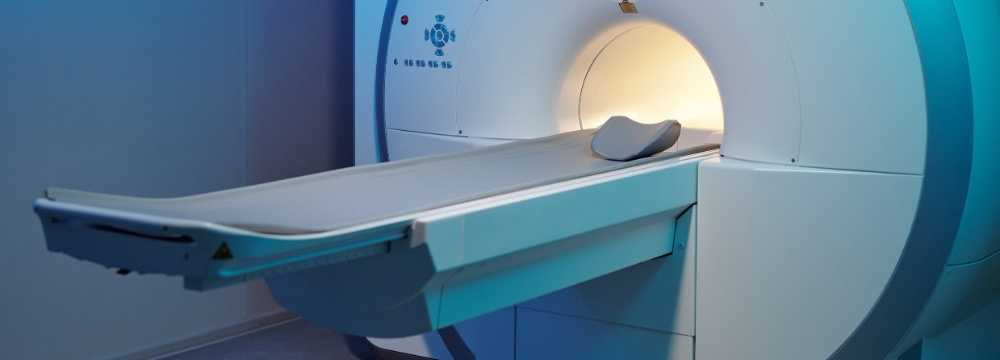
Most prostate MRI exams take approximately 30 to 60 minutes and are performed on an outpatient basis. During the scan, the patient lies on a table that slides into a large, tube-shaped machine containing a strong magnet. The exam is painless, although the machine produces loud knocking or humming sounds during image acquisition, and the tight quarters of the “tube” can sometimes induce a sense of claustrophobia. Your urologist will explain the procedure before the test is performed.
Prostate MRI has become one of the leading imaging tools for detecting, localizing, and staging prostate cancer. A prostate MRI improves diagnostic precision.
It can also evaluate other prostate conditions, including infection, inflammation, enlargement (benign prostatic hyperplasia), abscess, and complications following pelvic surgery.
When is Prostate MRI Recommended?
A physician may order a prostate MRI for several reasons.
One of the common indications is an elevated PSA (prostate-specific antigen) level. If blood work shows a rising or abnormally high PSA, an MRI can help determine whether suspicious areas are present before proceeding with a biopsy.
MRI is also recommended when a digital rectal exam reveals abnormalities, helping to localize concerning lesions and determine whether further testing is necessary.
For patients already diagnosed with prostate cancer, MRI can help determine staging and metastasis – it evaluates whether cancer is confined to the prostate or has extended into nearby structures such as the seminal vesicles, lymph nodes, or surrounding tissues. Knowing this directly influences decision-making regarding surgery, radiation therapy, or other treatment options between the patient and the physician.
In short, prostate MRIs are valuable for:
- Guiding targeted biopsies by identifying precise areas of concern
- Monitoring patients on active surveillance for low-risk cancer
- Assessing response to treatment
- Evaluating suspected recurrence after therapy
- Detecting possible metastatic disease in advanced cases
MRI improves risk stratification to determine who needs intervention and who can safely avoid unnecessary procedures.
What to Expect Before, During, and After
Preparation instructions may vary slightly, but in general, patients are advised to:
- Remove all metal objects, including jewelry, watches, and clothing with metal fasteners
- Inform the imaging center about any implants, such as pacemakers, cochlear implants, artificial joints, surgical clips, stents, or infusion ports
- Notify staff of kidney disease or allergies, especially if an MRI is planned with contrast (a chemical used to define structures and abnormalities)
Dietary instructions or limitations may also be indicated prior to testing.
During testing, you must remain still. The scan itself is painless, but the machine produces loud sounds as it acquires images; earplugs or headphones are typically provided. Some exams require intravenous contrast to enhance visualization of abnormal tissue and blood flow patterns. The entire process usually takes between 20 and 45 minutes, depending on the complexity of the study.
An MRI is not an invasive procedure, and there is no recovery period. If contrast was administered, drinking fluids afterward helps clear it from the body. A radiologist interprets the images and sends a detailed report to the referring physician, who will then discuss the findings and next steps.
FAQs About Prostate MRI Testing
Q: Is a prostate MRI painful?
No. Some individuals might experience mild discomfort from lying still or mild anxiety in an enclosed space. It is otherwise painless.
Q: Are you awake during the MRI?
Yes, and the procedure does not require anesthesia. Patients with significant claustrophobia can discuss mild sedation options with their physician beforehand.
Q: What does a PI-RADS score mean?
MRI findings are often categorized using the Prostate Imaging Reporting and Data System (PI-RADS), a standardized scoring system. One indicates a very low likelihood of clinically significant cancer, and five indicates a very high likelihood. Higher scores suggest that a targeted biopsy may be appropriate. Your doctor will discuss this with you after reviewing your results.
Q: If my doctor orders an MRI, does that mean I have cancer?
Not necessarily. MRI is a diagnostic tool used to clarify uncertainty and determine whether a biopsy is needed. It simply improves accuracy and your health outcome.
Q: How accurate is prostate MRI?
MRI is considered the premier imaging modality for evaluating the prostate. It is data-driven and effective at identifying aggressive tumors and detecting cancer that extends within and beyond the prostate gland.
Q: What happens after the MRI?
Depending on the results, your physician may recommend a targeted prostate biopsy, follow-up imaging for monitoring, additional scans to evaluate possible spread, and/or treatment options such as surgery, radiation therapy, hormone therapy, or active surveillance.
If you have questions about prostate health or concerns regarding men’s health issues, such as erectile dysfunction, low testosterone, prostate enlargement, and Peyronie’s disease, reach out to Dr. Richard Natale by calling or requesting an appointment online.
- American Cancer Society. (2024). Key Statistics for Prostate Cancer | Prostate Cancer Facts. Www.cancer.org; American Cancer Society. https://www.cancer.org/cancer/types/prostate-cancer/about/key-statistics.html.

Men’s Health Blog
Get the latest tips and news for
improving and maintaining your
health at any age.

Insurance For Penile Implants
Learn more about insurance coverage for a penile prosthesis (implant) for severe ED.

Video & Photo Library
These informative videos and before-and-after photos may help you decide on a particular procedure.